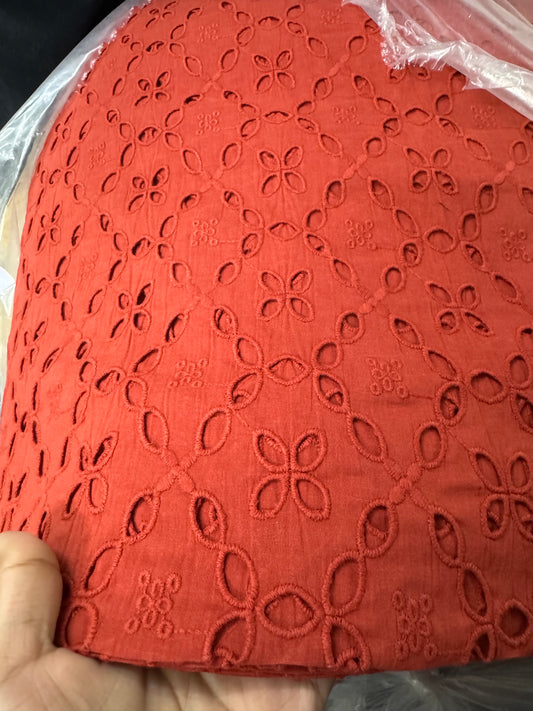
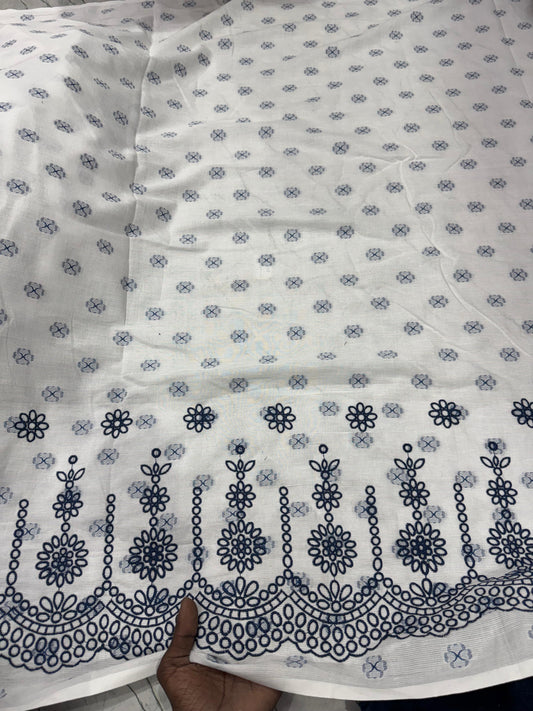
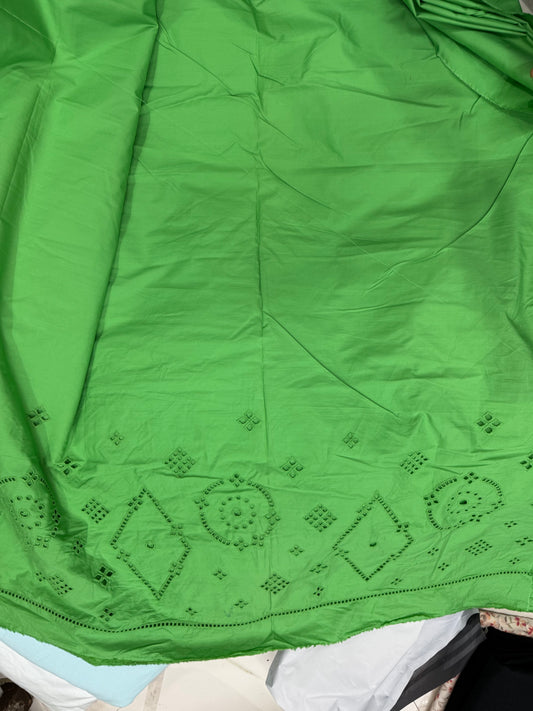
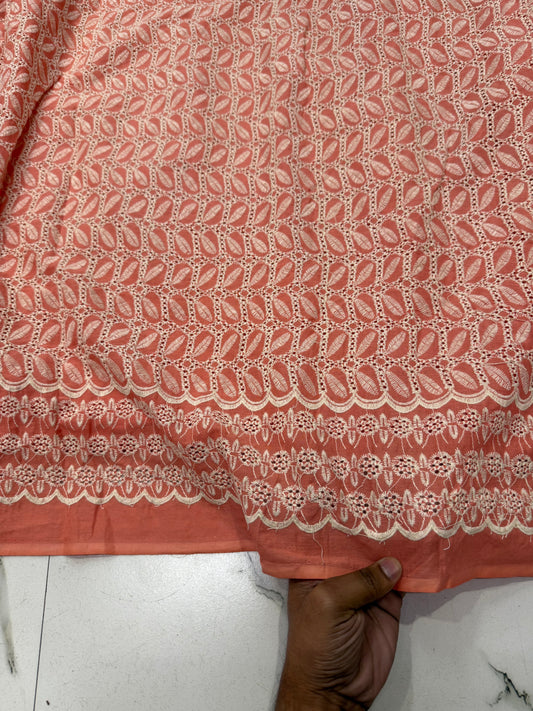
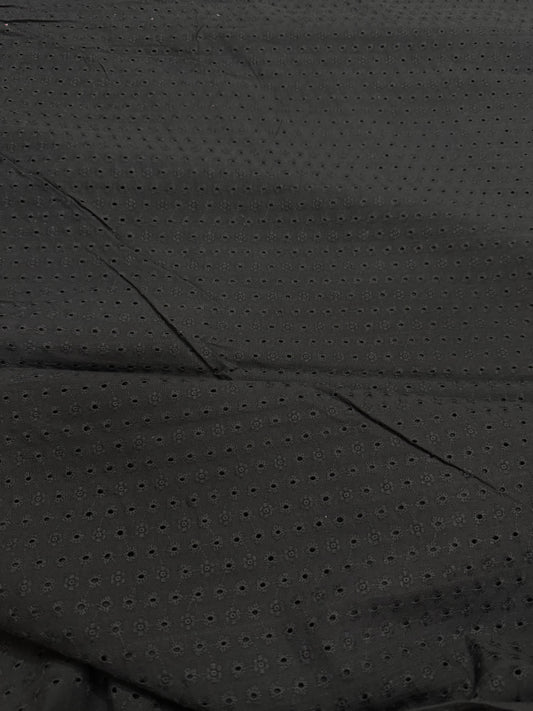
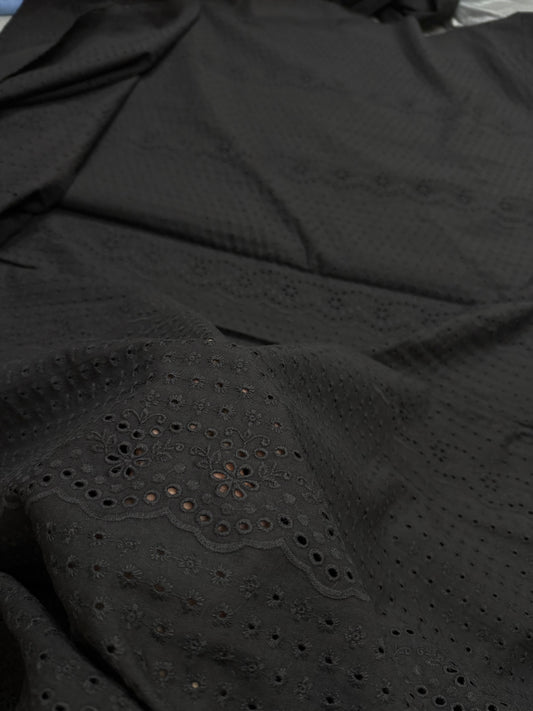
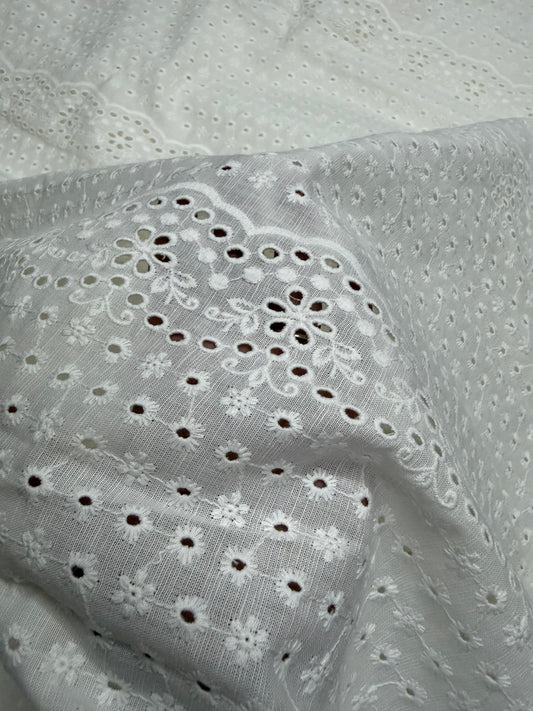
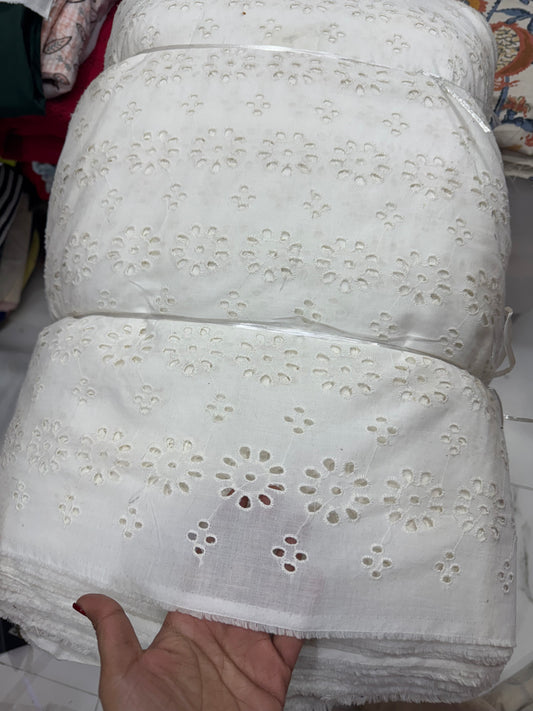
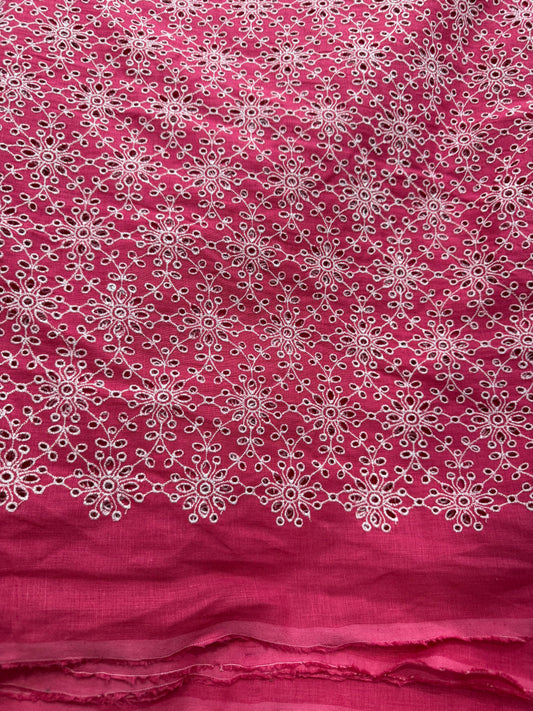
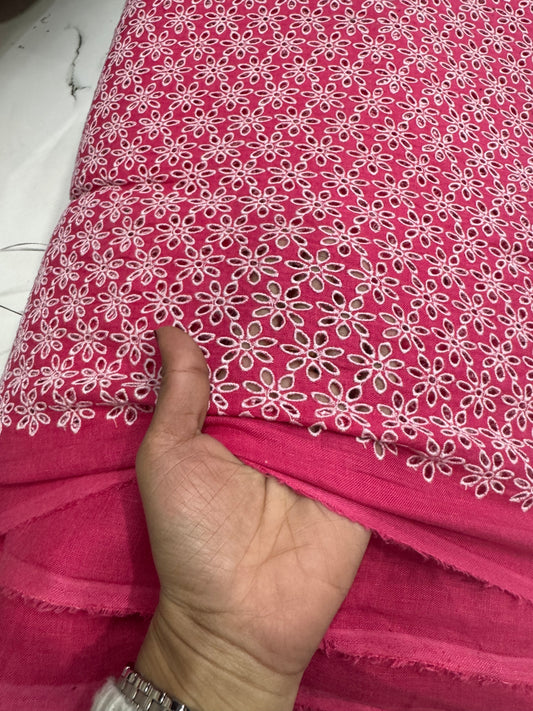
When you shop hakoba fabric online, you gain access to beautifully embroidered cotton bases that are breathable, soft, and comfortable for extended wear. Hakoba fabric is commonly used for kurtis, dresses, tops, blouses, dupattas, and children’s outfits due to its airy structure and elegant finish.
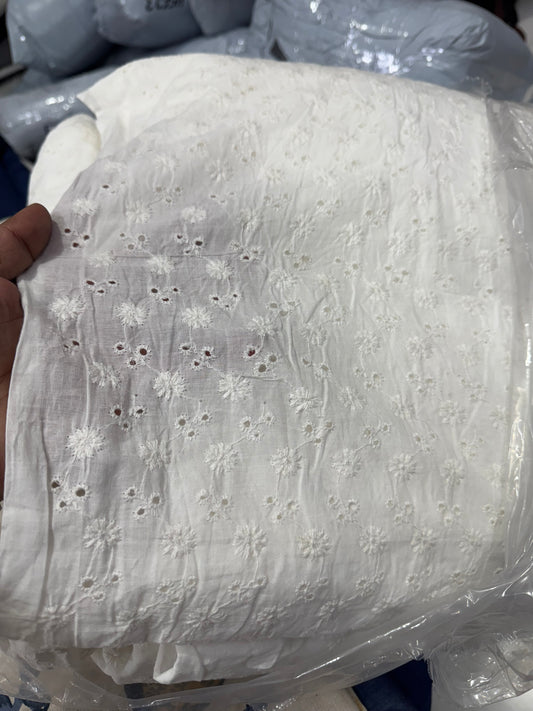
This collection by Surplus Fabric (MAF) includes classic white, pastel, and contemporary shades of hakoba fabric. There are patterns in the embroidery, which include floral motifs, geometric, and traditional designs. They are versatile for the person handcrafting timeless designs with them.
Hakoba fabric online is highly preferred for:
- Summer ethnic wear
- Festive outfits
- Kidswear
- Lightweight designer garments
- Layered silhouettes
Hakoba fabric is preferred by all due to its breathability (having a cotton base), and it is capable of taking intricate threadwork. It does not lose its structure amidst intricate work and fashioning. A creator can make out minimal everyday wear, festive wear, and sophisticated gala looks without the heaviness of fabric. The fabric is frequently used in tiered garments since the perforations reduce visual bulk.
Hakoba is not simply embroidered cotton — it is typically created using a Schiffli embroidery technique, where patterns are stitched and cut simultaneously to create openwork textures. The perforations are intentional and not defects; they are part of the airflow design of the garment.
The base cloth weight plays a major role in the final appearance. Lightweight bases create airy summer wear, while slightly heavier bases are chosen for structured garments like panels and layered outfits. Because the embroidery adds local stiffness, hakoba garments hold shape better than plain cotton despite being breathable.
Cutting hakoba requires pattern placement awareness. The motif direction matters; placing motifs incorrectly can distort the garment balance. Tailors often align embroidery symmetrically along center lines or hems rather than randomly cutting pieces.
Hakoba also behaves differently during washing. Unlike plain cotton, shrinkage is minimal because the embroidery stabilizes the weave. However, ironing should be done from the reverse side to avoid flattening the raised threadwork texture.
Our curated selection ensures consistent embroidery quality, clean finishing, and durable stitching. Designers often pair hakoba fabric with linings or combine it with plain fabrics to create statement pieces.
Shop hakoba fabric online to discover timeless embroidery fabrics that blend comfort with refined craftsmanship.

 -80% OFF